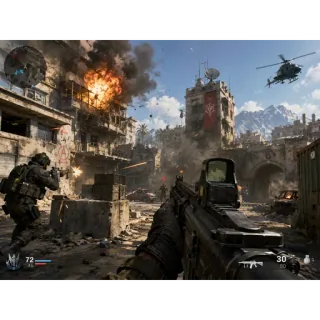


In 2026, browser games are competitive with native mobile applications for the first time in history. What once was a playground of simple, low-fidelity time-wasters has evolved into a sophisticated distribution channel. This shift is driven by five converging forces: the widespread adoption of WebGPU, a massive mobile-first transition, rising app store friction, normalized ad SDKs, and powerful compilation tech.
#WebGPU: The Technical Quantum Leap
Chrome shipped WebGPU stable in 2023, followed closely by Safari and Firefox. In 2026, roughly 94% of active browser viewports support native WebGPU pipelines. While WebGL functioned as a basic wrapper around OpenGL ES 2.0, forcing high CPU overhead and single-threaded bottlenecks, WebGPU is designed from the ground up to match modern native APIs like Vulkan, Metal, and DirectX 12.
WebGPU delivers explicit memory management, bind groups, and command buffers, allowing developers to record complex rendering commands across multiple CPU threads. More importantly, it unlocks compute shaders directly inside the browser. In multiplayer .io arenas or FPS games, this allows developers to offload massive math operations — like 10,000-agent crowd simulation, particle physics, and complex lighting — directly to the GPU. A simulation that would choke a single-threaded JavaScript CPU loop at 10 FPS now runs buttery smooth at a locked 60 FPS.
#Game Engine Roadmaps & WASM Compilation
Engine support has completely matured. Unity 6 features an outstanding, highly optimized WebGPU backend, while Godot 4.4+ compiles WebGPU targets by default. Lightweight web engines like PlayCanvas and Babylon.js have fully embraced WebGPU, treating WebGL purely as a legacy fallback. To solve initial load times, engines now stream WebAssembly (WASM) modules, compiling code on the fly with Brotli compression to keep the initial payload under a tight 12MB limit.
#The Mobile-First Mandate
Mobile is no longer an afterthought — it is the dominant platform, representing 62% of all plays on Glaze Games. Standard desktop landscape templates are rapidly disappearing. The most successful games are designed portrait-native from day one, reflecting how users naturally hold their phones while browsing social media feeds.
Our data shows that portrait-native games achieve a 30% longer median session length on phones compared to landscape games that force a rotation overlay. Touch controls have also standardized around clear, intuitive gestures: bottom-left virtual joysticks for movement, tap-to-interact buttons, and simple swipes. This makes picking up a new game instantaneous, aligning perfectly with the tight attention budgets of modern web players.
#App Store Friction & Developer Economics
Why are developers flocking back to the web? Because native app stores have become increasingly hostile and expensive for small and mid-sized studios. Apple's high commissions and periodic app sweeps, combined with Google Play's strict closed-testing requirement (forcing all new apps to run a 14-day closed test with at least 20 manual testers), have pushed the timeline of releasing a simple mobile game from a weekend project to a multi-month bureaucratic hurdle.
The web represents the ultimate alternative. There are no developer registration fees, no review queues, no arbitrary rejections, and no 30% platform tax. A developer can build a game using Godot or Unity, export to HTML5/WebGPU, and distribute it instantly to millions of players on portals like Glaze Games.
#The Reality of Modern Web Monetization
Web monetization has matured. Reputable browser-game distributors offer clean, polite ad SDKs that support rewarded video, pre-rolls, and interstitials with strict frequency capping. The following table illustrates the typical effective CPM (Cost Per Mille) ranges we observe in 2026 across different regions and formats:
- Tier 1 Markets (US, UK, CA, DE): Rewarded Video: $5.00 - $12.00 CPM · Interstitials: $2.50 - $6.00 CPM · Display Banners: $0.40 - $1.20 CPM.
- Tier 2 Markets (FR, JP, BR, MX): Rewarded Video: $2.50 - $5.50 CPM · Interstitials: $1.20 - $3.00 CPM · Display Banners: $0.20 - $0.60 CPM.
- Tier 3 Markets (IN, ID, ZA, PH): Rewarded Video: $0.80 - $2.00 CPM · Interstitials: $0.40 - $1.00 CPM · Display Banners: $0.05 - $0.25 CPM.
These rates make HTML5 game development highly profitable for indie creators. A viral hit that generates a few million play sessions can comfortably sustain a small team, provided they optimize their game loops to encourage repeated plays and high retention.
#What is Still Broken
Despite this progress, several technical hurdles remain. Game progress saves are highly fragmented; because players move between different portals, their local storage states are frequently wiped, and there is no universal cross-portal cloud save standard. Multiplayer matchmaking SDKs are also heavily fragmented, forcing developers to build custom matchmaking lobbies and WebSocket servers from scratch, which adds months of work. Anti-cheat measures are virtually nonexistent on the client side, meaning games must employ heavy, expensive server-authoritative logic to prevent memory hacking and aimbots.
#Looking Ahead
The next two years of browser gaming will be defined by consolidation and quality. Hundreds of low-effort clone portals will shut down as search traffic concentrates on high-quality, trusted platforms. As WebGPU becomes the universal baseline and WASM startup times shrink further, the boundary between a browser game and a downloaded desktop app will completely dissolve, ushering in a golden age of friction-free, high-fidelity gaming.